Product
Double-Track Expansion Opfikon–Kloten
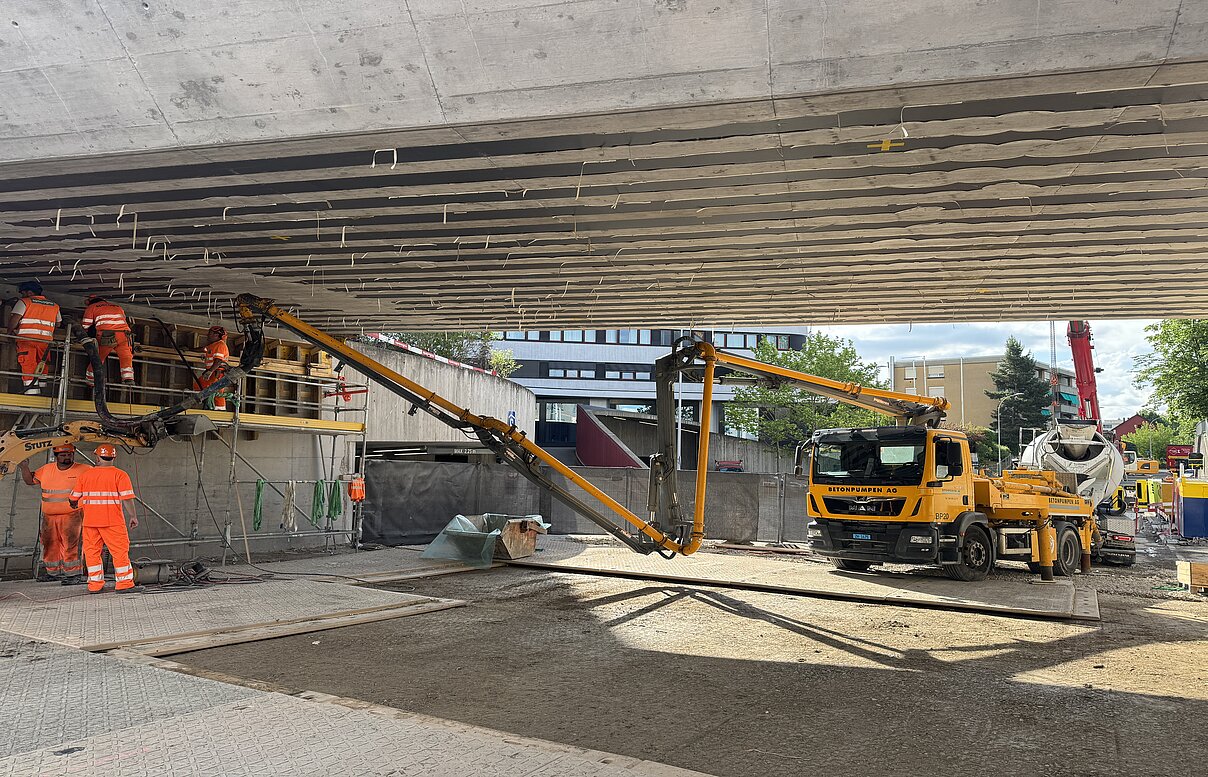
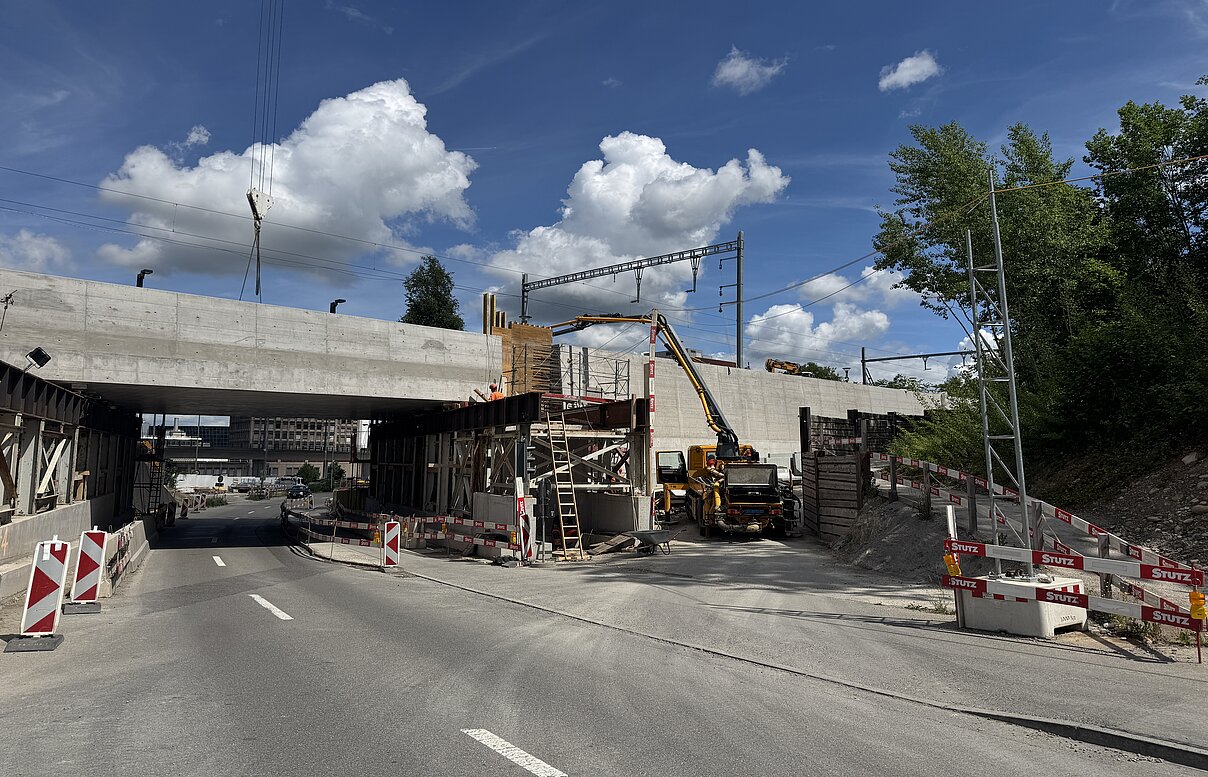
When people think about the expansion of Switzerland’s rail network, they typically think of tracks, bridges, overhead line systems and railway technology. What often remains unseen, however, is a critical component underlying many infrastructure projects: concrete. Concrete played a key role in the double-track expansion between Opfikon Riet and Kloten. This SBB project forms part of the Rail Expansion Programme 2035 and will provide additional capacity for both passenger and freight traffic. During an intensive multi-week construction phase in spring 2026, numerous civil engineering structures were constructed, modified and extended. The works were carried out under significant time constraints, with certain activities performed on a 24-hour basis.
Challenge
Particularly demanding were the concreting operations carried out between late May and early June. While construction activities continued around the clock, daytime temperatures reached typical summer levels. Under these conditions, various rapid-hardening concrete systems had to perform reliably and consistently. The challenge was to reconcile seemingly conflicting requirements. On the one hand, sufficient working time was required for transportation, placement and surface finishing. On the other hand, high early-age strength development was essential to allow subsequent construction activities to proceed without delay.
Elevated temperatures present a particular challenge for rapid-hardening concrete systems. Increased concrete temperatures accelerate cement hydration and significantly reduce workability retention. At the same time, neither consistency nor strength development can be adversely affected. Continuous monitoring of fresh concrete properties and close coordination between the concrete plant, the construction site and the materials engineering team were therefore essential.
Solution
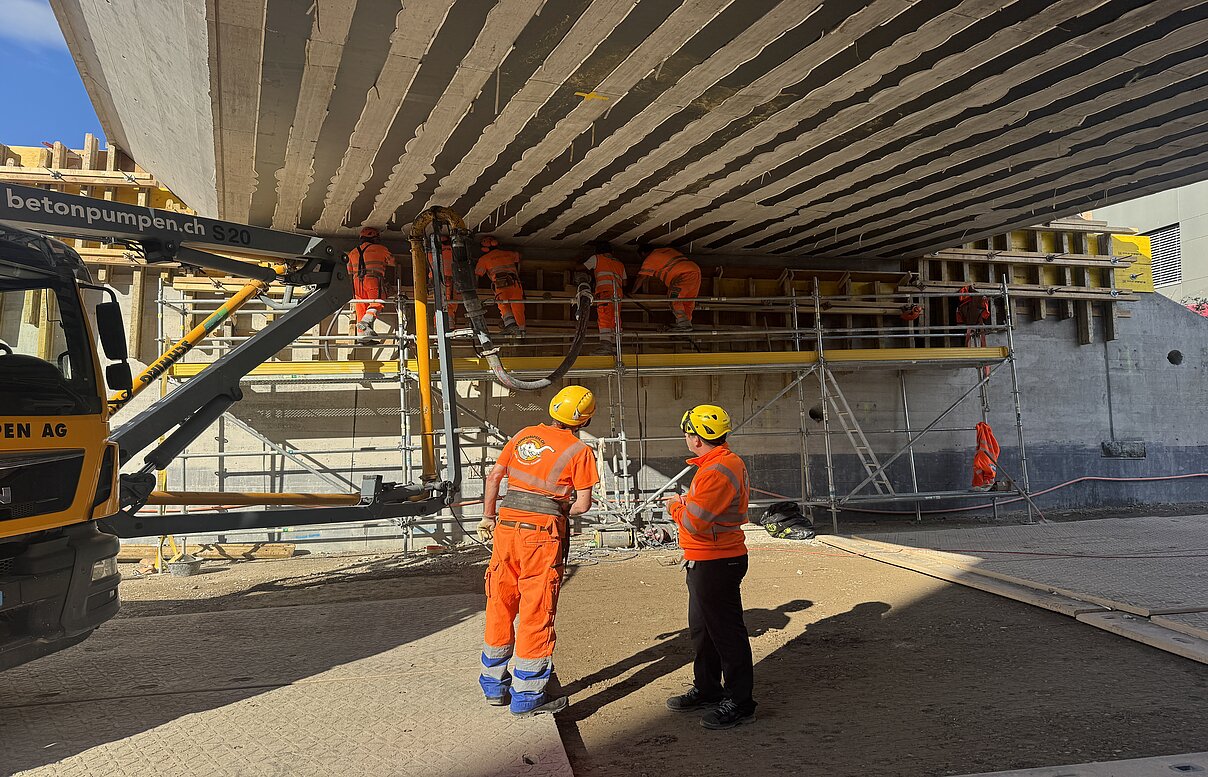
Over a period of more than one week, a total of 180 m³ of Concretum® Q-FLASH 5/20 rapid-hardening concrete was produced and supplied to the construction site from the Ebirec concrete plant. The deliveries comprised 48 m³ of self-compacting rapid-hardening concrete (SCC) and 132 m³ of pumpable rapid-hardening concrete. The concretes were used for various civil engineering structures. Concreting works included abutment seats, chamber walls, extensions to the foundations of the bridge launching system, as well as walls and slabs of a pedestrian underpass. The works were carried out both before and after the bridge launch operation and had to be precisely integrated into the overall construction schedule. The project requirements varied considerably. While some structural elements demanded high flowability to ensure complete encapsulation of densely reinforced sections and difficult-to-access areas, other elements required excellent pumpability, robustness and controlled working times. The use of SCC rapid-hardening concrete in particular demonstrated the capabilities of modern concrete technology. Self-compacting concretes are typically associated with demanding requirements regarding flowability and stability. The additional requirement for rapid strength development significantly increases the complexity of the concrete mix design. Nevertheless, all specified performance criteria were reliably achieved.
Result
The Opfikon–Kloten double-track expansion demonstrates that rapid-hardening concrete has evolved far beyond a specialist material used solely for repair applications. Modern concrete systems enable the successful delivery of complex infrastructure projects under demanding schedules and challenging climatic conditions. Success depends not only on the speed of strength development but also on the seamless interaction between materials engineering, production, logistics and on-site execution.
When additional trains begin operating between Zurich Airport and the Glattal region and the future 15-minute service interval becomes a reality, very few passengers will think about concrete. For the project stakeholders, however, one thing was clear: the success of such an intensive construction phase begins long before work starts on site, it begins at the concrete plant.
Facts
-
-
Country
Switzerland
-
Construction Period
2026, May – June
-
Client
Swiss Federal Railways (SBB)
-
Construction Company
Construction Joint Venture ARGE RESS
-
Concrete Producer
Eberhard Bau AG, Ebirec Plant
-
Concrete Volume
180 m3
-
Field of application
Track construction, Bridge construction
-
Paving method
Pumping