Product
Maintenance Works at Zurich Airport in 2026
Q-FLASH Rapid-Hardening Concrete for Airport Maintenance Under Extreme Time Pressure
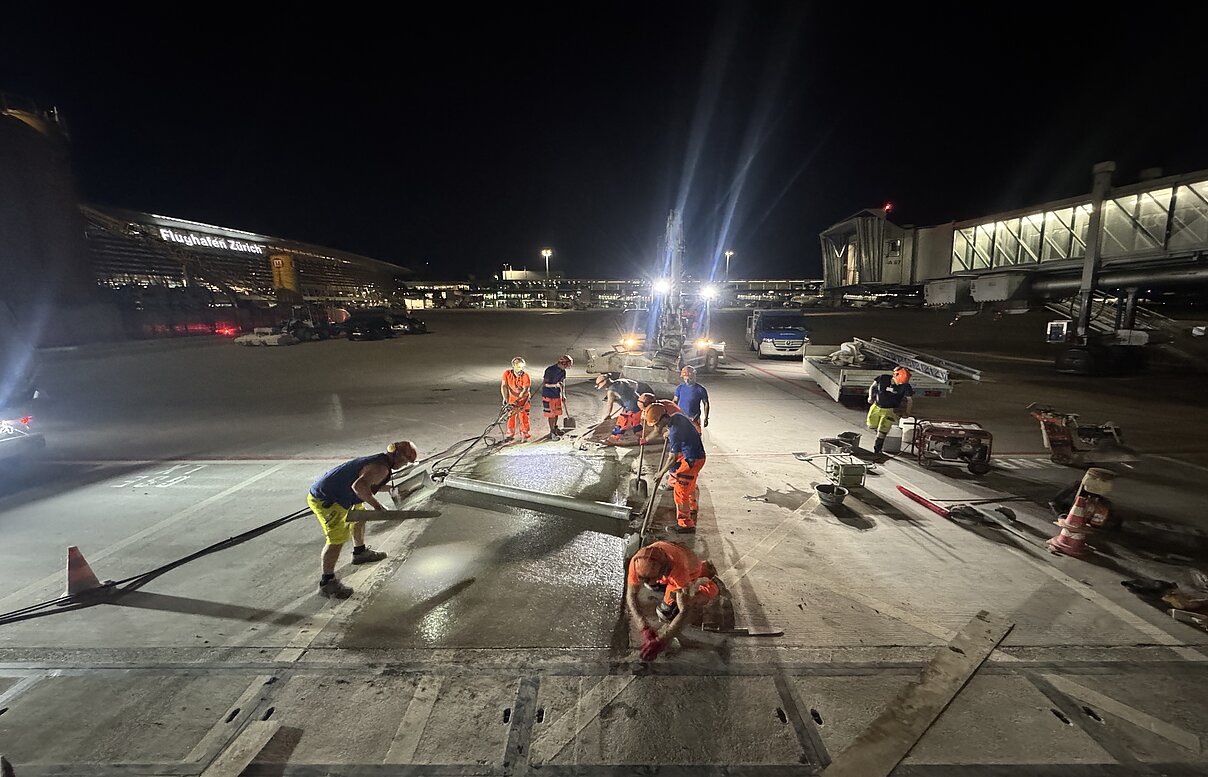
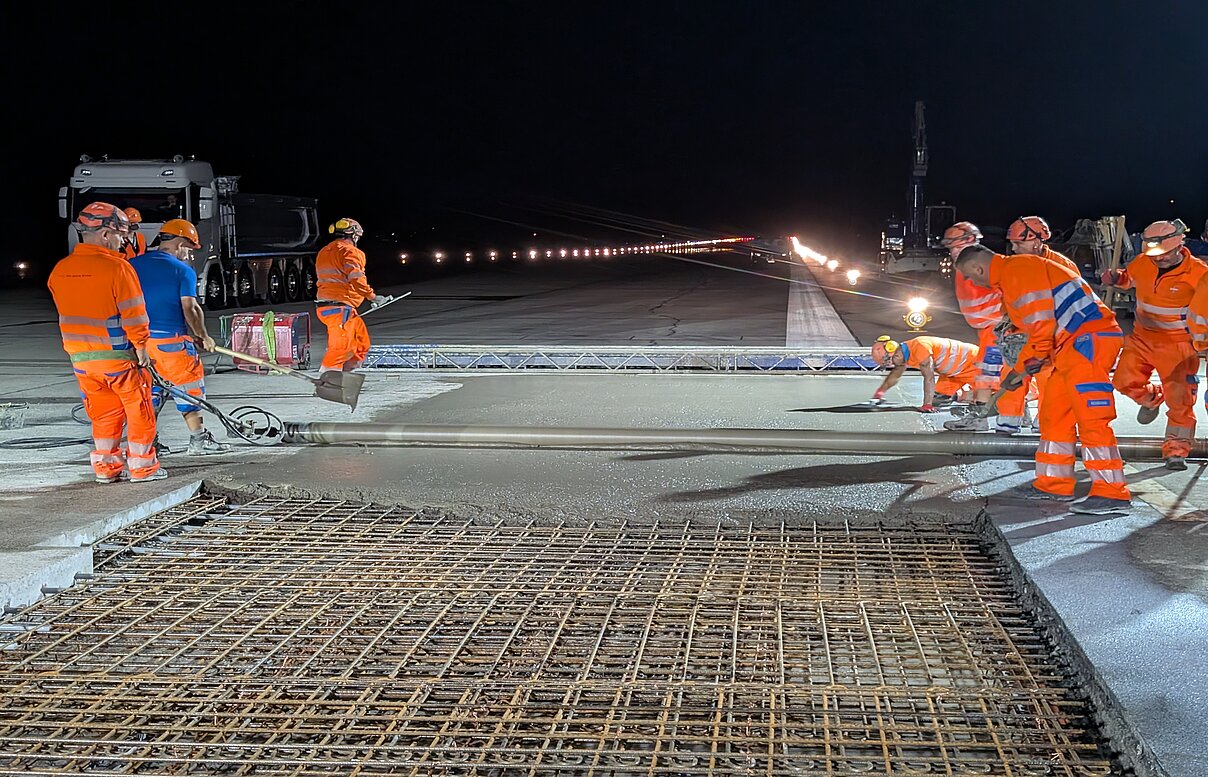
At Zurich Airport, regular maintenance of runways, taxiways and aircraft stands is essential to ensure safe and efficient flight operations. However, concrete repairs in this demanding environment require more than just high-performance construction materials. With only a few hours available between the end of nighttime flight operations and the resumption of operations the following morning, every stage of the construction process must be precisely coordinated.
As part of the annual maintenance programme in 2026, Concretum's rapid-hardening concrete solutions, Concretum® Q-FLASH 2/20 and Concretum® Q-CON, were used to repair various airfield pavement areas. In total, 312 m³ of Concretum® Q-FLASH 2/20 rapid-hardening concrete were placed at Zurich Airport in 2026. In addition to the demanding requirements for workability and early strength development, the project also demonstrated how digital monitoring can provide valuable insights into the concrete setting process.
The following project insights highlight the challenges, technical requirements and solutions involved in carrying out concrete repairs under extreme time pressure.
What repair works were carried out at Zurich Airport?
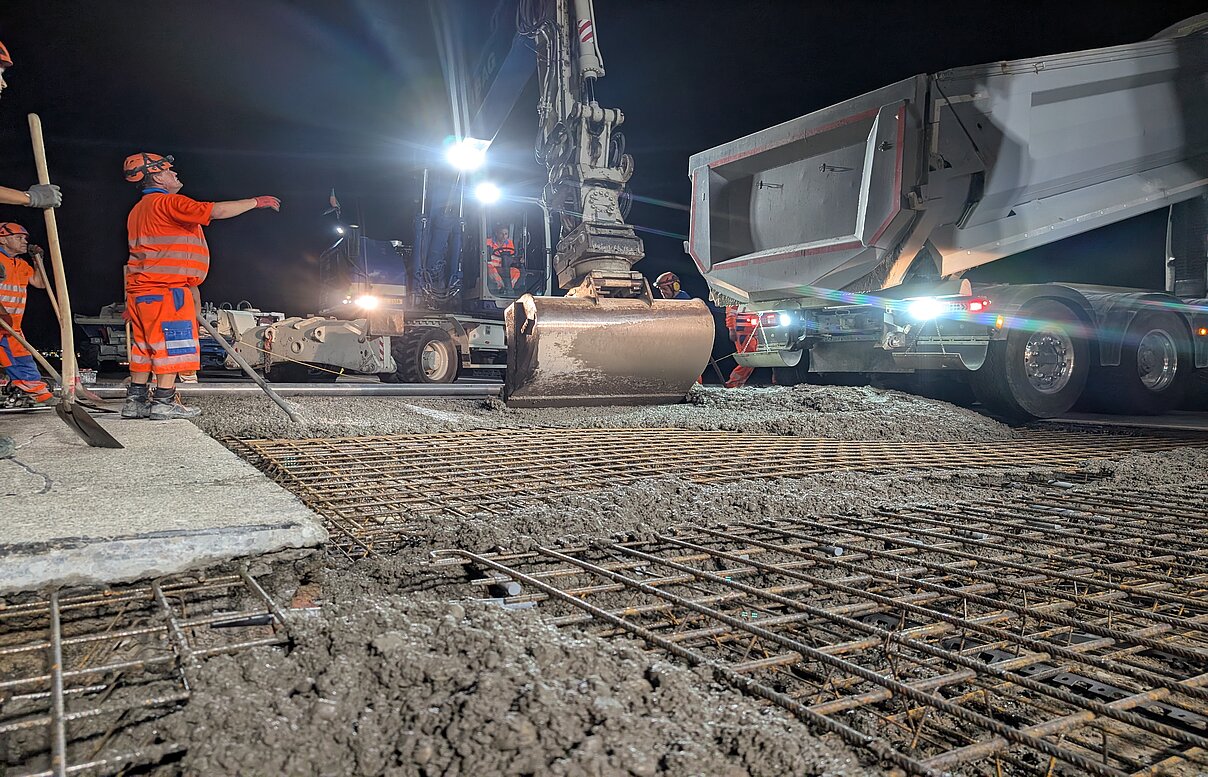
As part of the annual maintenance programme for Zurich Airport's airfield pavements in 2026, numerous concrete slabs and partial slab sections were replaced on runways, taxiways and aircraft stands. Concretum® Q-FLASH 2/20 and Concretum® Q-CON were used for these works.
Why were the repair works particularly challenging?
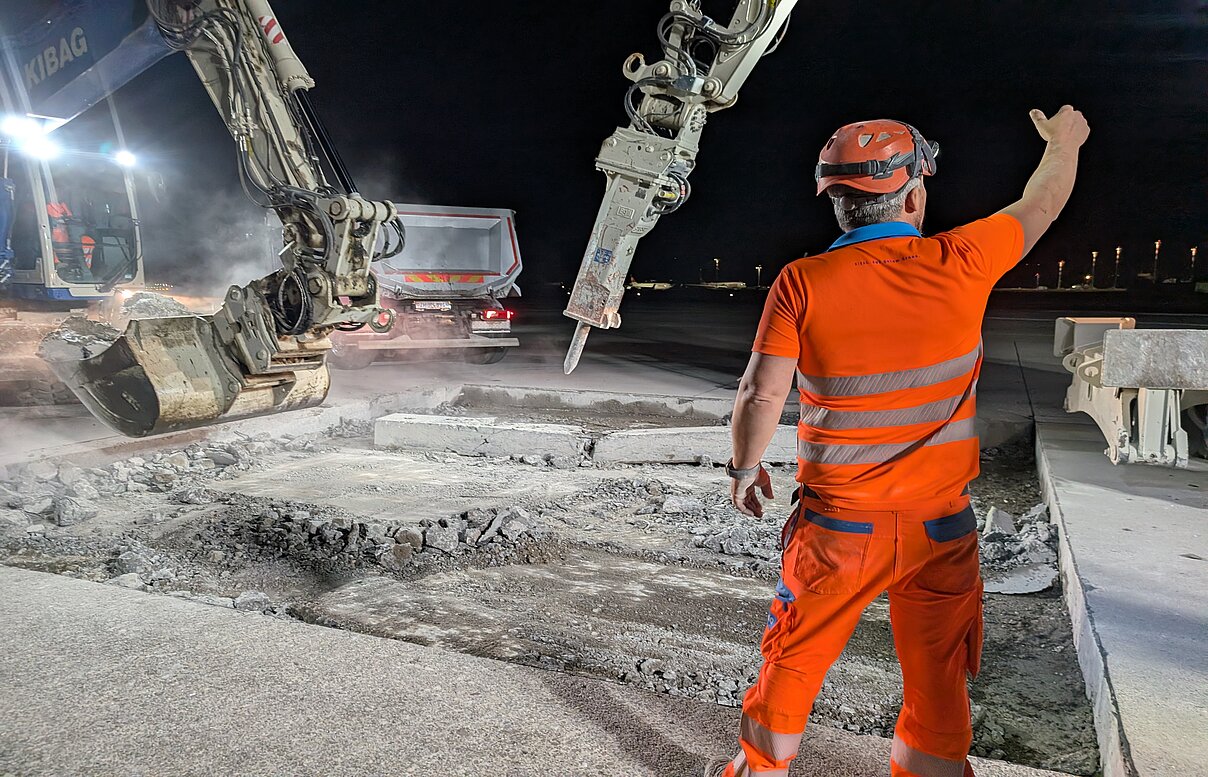
The main challenge was the extremely short construction window. Work could generally only begin after flight operations had ended at around 11:30 p.m. All construction activities had to be completed by 04:45 to 05:00 a.m. at the latest, allowing sufficient time for cleaning, marking and subsequent inspections. Within just a few hours, existing concrete slabs or partial slab sections had to be removed, the substrate prepared and new concrete placed.
What requirements did the rapid-hardening concrete have to meet?
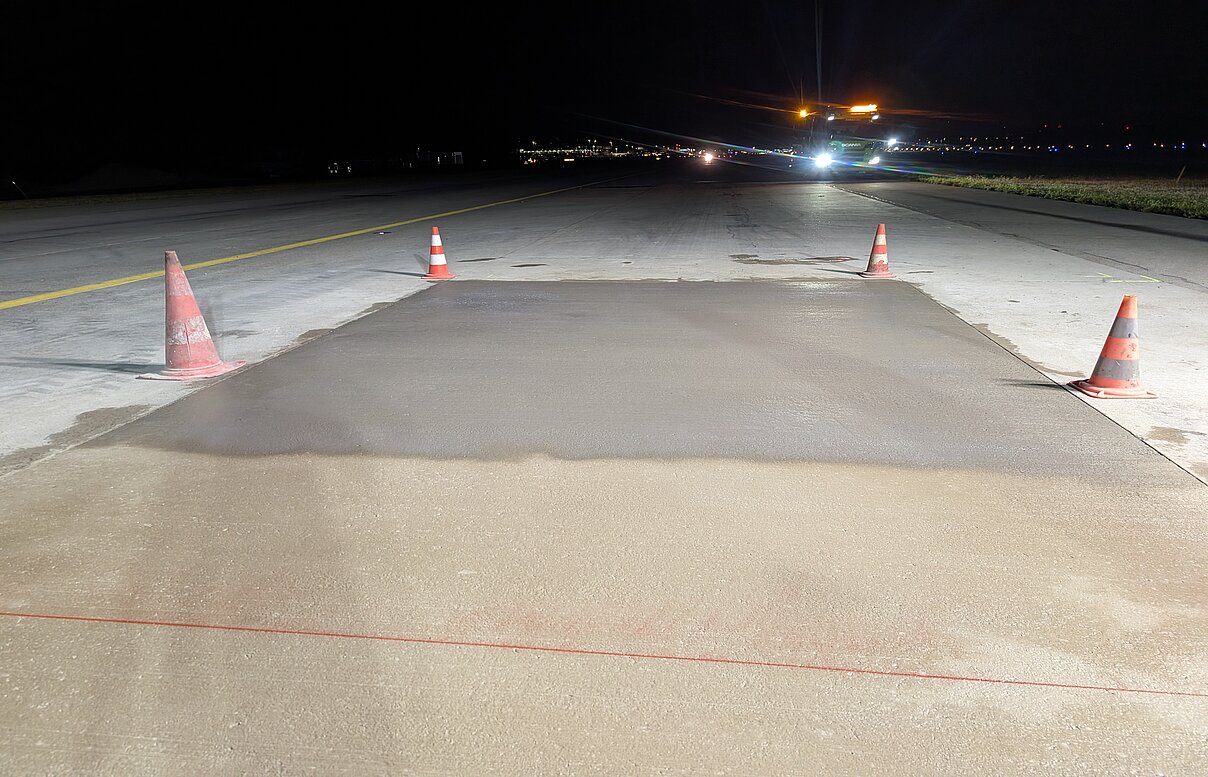
The Q-FLASH concrete had to provide an open time of 80 to 90 minutes while achieving a specified compressive strength of 16 MPa within a short period. This combination allowed the construction team sufficient time for concrete placement and surface finishing while enabling the affected airfield pavement areas to be reopened to traffic at an early stage.
Where was the concrete produced and placed?
The concrete was produced at the KIBAG batching plant in Effretikon. Depending on the nightly construction schedule, the individual concrete pours varied in volume. Concrete quantities of 24 m³, 27.25 m³ and up to 33.5 m³ were placed per night. The rapid-hardening concrete was used on aircraft stands, various taxiways and directly on runways 10/28, 16/34 and 14/32.
In addition to the concrete technology itself, a digital solution was implemented as part of the project to provide greater transparency throughout the setting process. Particularly in time-critical applications, information on how the concrete develops after placement can provide valuable support to the construction team.
What is Concretum Setting Control?
Concretum Setting Control is a digital system for the continuous monitoring of the concrete setting process. Temperature sensors record the temperature development within the concrete in real time. The system automatically analyses the temperature profile and detects characteristic changes during setting.
Why is monitoring the setting process important?
In time-critical concrete works, rapid strength development is not the only decisive factor. It is equally important to know when the concrete actually begins to react and set. Once the onset of setting is detected, the construction team can be automatically notified via a push notification.
What benefits does Concretum Setting Control offer on site?
Concretum Setting Control complements the construction team's experience by providing objective measurement data. The recorded data are stored and can be used for subsequent analysis and documentation purposes. Particularly in applications involving tight construction windows, the system provides greater transparency regarding the actual hardening behaviour of the concrete.
How do Q-FLASH and Concretum Setting Control complement each other?
Q-FLASH provides the rapid strength development required for short construction windows while ensuring sufficient working time for concrete placement. Concretum Setting Control makes the setting process digitally visible and supports the construction team with real-time data. Together, they combine high-performance rapid-hardening concrete technology with digital process monitoring.
High-Performance Concrete Solutions for Time-Critical Infrastructure Repairs
The maintenance works at Zurich Airport demonstrate the demanding conditions under which concrete repairs on airfield pavements must be carried out. Short construction windows, strict deadlines and high requirements for material performance call for reliable construction materials and precisely coordinated workflows.
By combining rapid-hardening concrete technology with digital setting monitoring, Concretum provides solutions that meet these challenges and support the efficient execution of time-critical infrastructure repairs.
Facts
-
-
Country
Switzerland
-
Construction Period
2026, August
-
Client
Flughafen Zürich AG
-
Construction Company
KIBAG Bauleistungen AG
-
Concrete Producer
KIBAG Baustoffe
-
Concrete Volume
312 m3
-
Field of application
Air traffic areas
-
Paving method
Manual paving